
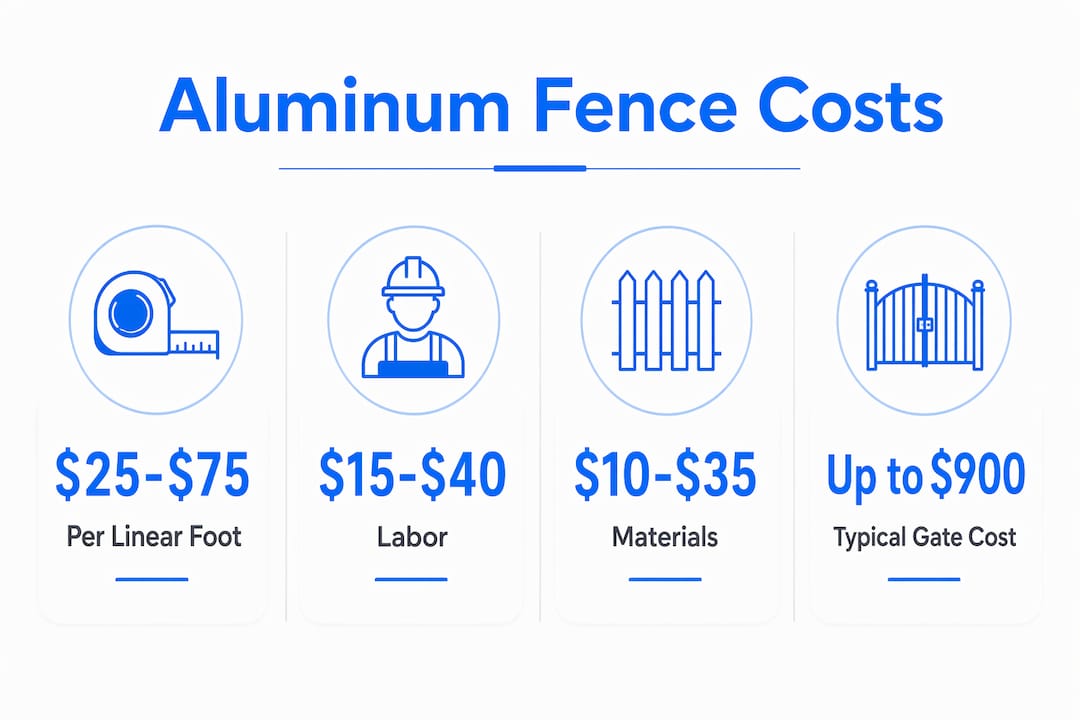
Most homeowners pay between $25 and $75 per linear foot for a professionally installed aluminum fence, all-in. For a typical 150–200 ft residential project, that works out to roughly $3,750–$15,000 depending on style, height, and site conditions. The 2026 national benchmark from contractor-side data sits closer to $35–$65 per linear foot, with mid-range projects clustering near $48/ft.
Materials drive the largest share of that number, often a substantial portion of the total, while labor accounts for a significant fraction. The three factors that move the needle most are fence style (a decorative ornamental panel costs far more than a basic picket), gate count, and whether your yard has slopes that require specialized installation techniques.
A realistic budget for a standard residential aluminum fence should account for:
- Materials (panels, posts, rails, caps, hardware): in a typical moderate range per linear foot
- Labor (post setting, panel install, gates, cleanup): in a commonly observed range per linear foot
- Permits: fees vary widely depending on your municipality
- Gates: installation costs vary greatly depending on size and automation
- Old fence removal (if applicable): generally charged per linear foot
Table of Contents
- How does aluminum fence cost break down by line item?
- What does aluminum fence cost by style?
- What factors raise or lower your aluminum fence price?
- What does the installation process look like, and how long does it take?
- Sample cost estimates for 100, 200, and 300 linear feet
- How does aluminum compare to wood, vinyl, and steel on cost and lifespan?
- How do you vet and hire a fencing contractor?
- What does aluminum fence maintenance cost, and what do warranties cover?
- Key Takeaways
- What homeowners should know before signing a contract
- Get a free on-site estimate from Advantagefencenj
- Useful sources and further reading
How does aluminum fence cost break down by line item?
Understanding where the money goes makes it much easier to spot where you can trim without sacrificing quality.
Materials
Panel cost is the biggest material variable. A basic residential picket panel in standard black powder coat runs toward the lower end of the material range; an ornamental panel with decorative finials, thicker-gauge alloy, and a custom color can cost three times as much per foot. Posts, rails, post caps, and hardware add to the material total but rarely dominate it. Expect the full materials package to land between $7 and $32 per linear foot depending on grade and style.
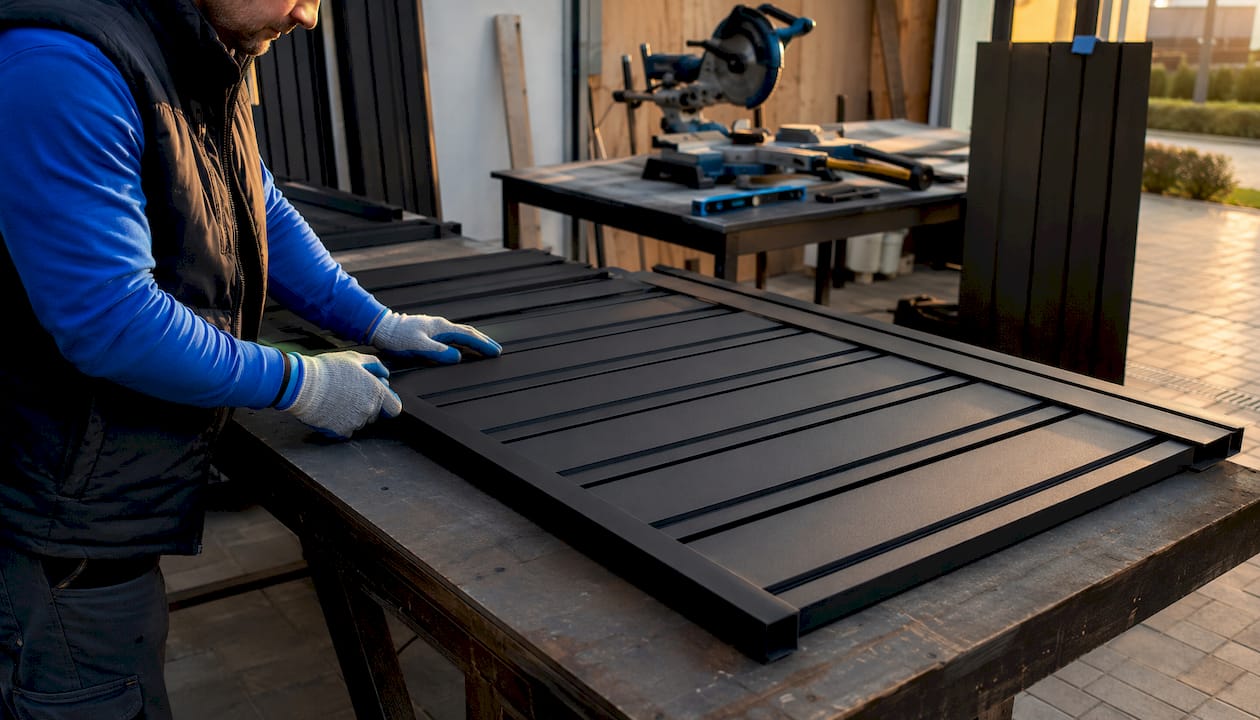
Finish matters more than most buyers realize. Standard black or bronze powder coat is priced into most panel quotes. A custom color or a specialty architectural finish adds a per-panel premium that compounds quickly across a 200 ft run.
Labor
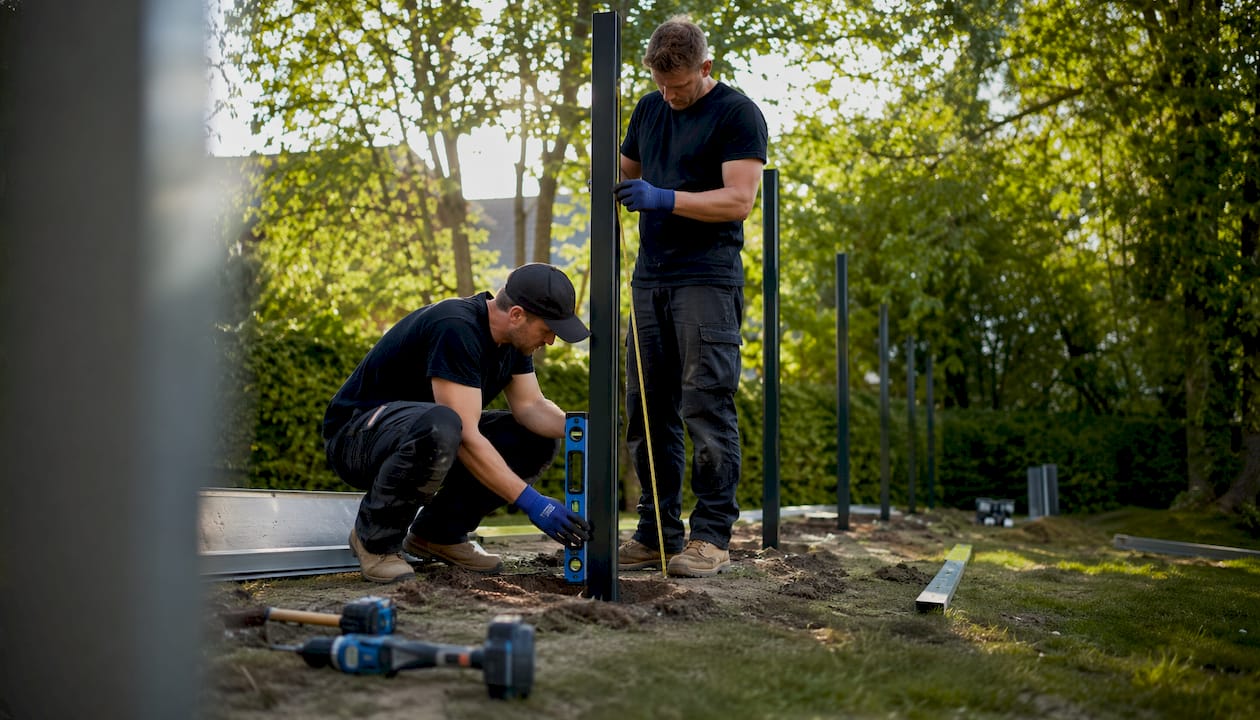
Labor typically runs $15–$40 per linear foot for professional installation. The work breaks down into four main tasks: post setting (usually the most time-intensive step, especially in rocky or clay-heavy soil), panel installation, gate hanging and hardware adjustment, and final cleanup. A crew of two can typically complete a straightforward 150 ft job in one to two days.
Labor as a share of total cost generally falls between 25% and 40%. On a $10,000 project, that means $2,500–$4,000 goes to the crew. Local labor markets shift this band: coastal metro areas tend to run 10–15% higher than inland markets, so always ask whether travel or delivery fees are included in the quoted rate.
Other line items to budget
- Permits: Most municipalities require a permit for fence installation. Fees range from $20 to $700 depending on local rules, and pool fences often trigger stricter inspections.
- Old fence removal: If you're replacing an existing fence, budget $3–$8 per linear foot for demo and haul-away.
- Site prep and grading: Significant slope work or tree/stump removal can add hundreds to thousands of dollars.
- Delivery: Some suppliers charge separately for panel delivery, especially on large orders.
Sample calculation: 150 ft project
| Line Item | Low Estimate | Mid Estimate | High Estimate |
|---|---|---|---|
| Materials (150 ft) | — | — | $4,800 |
| Labor (150 ft) | — | $3,750 | $6,000 |
| One standard gate | $150 | $600 | — |
| Permit | $50 | $200 | — |
Materials typically represent 40–60% of total aluminum fence project cost; labor accounts for 25–40%. The remaining budget goes to permits, gates, and site prep.
What does aluminum fence cost by style?
Style is the single biggest cost variable in the entire project. Split-rail aluminum runs roughly $20–$40 per linear foot installed, while a privacy aluminum fence can reach $75–$130 per linear foot. Everything else falls somewhere in between.
| Style | Installed Cost (per linear foot) | Common Height | Typical Use Case |
|---|---|---|---|
| Split-rail / ranch | $20–$40 | 3–4 ft | Pasture, open property borders |
| Flat-top picket | $25–$40 | 3–4 ft | Front yards, decorative borders |
| Ornamental / spear-top | $30–$60 | 4–6 ft | Decorative, security, curb appeal |
| Pool fence | $35–$65 | 4–5 ft | Pool enclosures, code-compliant |
| Commercial / heavy-duty | $15–$40 | 5–8 ft | Business perimeters, high-traffic areas |
| Privacy (with slats) | $75–$130 | 5–6 ft | Backyard privacy, screening |
A few things push any style toward the top of its range:
- Decorative finials (spear tops, ball caps, fleur-de-lis): add $2–$8/ft depending on complexity
- Thicker alloy gauge (commercial-grade vs. residential): adds material cost but extends lifespan
- Custom powder-coat colors: standard black or bronze is priced in; custom colors carry a per-panel premium
- Privacy slats or infill panels: the biggest single price jump in the style chart above
For photos of specific panel profiles and exact product specs, the Advantagefencenj aluminum fencing page shows available styles and grades for residential and commercial applications.
What factors raise or lower your aluminum fence price?
Some of these you can control. Others are fixed by your property. Knowing which is which helps you negotiate and prioritize.
High-impact factors:
- Fence style and height — Moving from a 4 ft ornamental to a 6 ft privacy fence can double the per-foot cost. This is the lever with the most room to save: choosing a standard residential height and a flat-top or spear-top profile instead of a privacy panel typically cuts $20–$50/ft off the installed price.
- Number and type of gates — A single walk gate runs $150–$600 installed. A double drive gate with automation can reach $3,000–$6,000. Every gate adds hardware, post reinforcement, and labor time.
- Terrain and slope — A flat suburban yard is the cheapest scenario. Significant grade changes require either racked panels (angled to follow the slope) or stepped panels with adjusted post spacing. Either approach adds labor hours and sometimes requires custom-cut panels.
Medium-impact factors:
- Finish and color — Standard black or bronze powder coat is the baseline. Any custom color adds a per-panel premium that compounds across a long run.
- Local labor rates — Coastal metro markets run 10–15% above the national average. Rural and inland markets often come in below it. This is largely outside your control, but getting three quotes from local contractors gives you a real read on your market.
- Soil and post foundation requirements — Rocky soil, high clay content, or areas with frost heave may require deeper post holes, concrete footings, or both. Expect an upcharge if your contractor discovers difficult soil conditions during the estimate.
Lower-impact factors:
- Permit fees — Typically $20–$700, a small share of total project cost but worth confirming upfront since pool fences and taller commercial fences often trigger more expensive permits and mandatory inspections.
- Delivery and material lead time — Custom colors or specialty profiles may require a 2–4 week lead time that delays your project start.
The clearest way to save: choose standard panel sizes, a standard finish, and limit gate count. Contractors consistently report that style and height dominate cost variance, and that homeowners who stick to standard options see the most predictable pricing.
What does the installation process look like, and how long does it take?
For a 150–200 ft residential project, most professional crews complete the job in one to three days. Here's how the timeline typically unfolds:
- Day 1 — Site prep and post setting: The crew marks post locations, calls 811 to confirm utility clearances, digs post holes (typically 24–36 inches deep depending on frost line and fence height), sets posts in concrete, and allows cure time. This is the most labor-intensive phase.
- Day 2 — Panel installation and gates: Once posts are set and concrete has cured (usually overnight), panels are attached to posts, rails are secured, and gates are hung and adjusted. Hardware is tested for proper swing and latch function.
- Day 3 (if needed) — Final adjustments and cleanup: Touch-ups, hardware tightening, debris removal, and a final walkthrough with the homeowner.
Permit timing can extend this schedule. Many municipalities require a permit inspection before or after installation, and approval can take anywhere from a few days to several weeks depending on your local building department. Pool fences almost always require a post-installation inspection before the pool can be used.
How contractors price the work:
Most residential fencing contractors quote one of three ways: a flat per-linear-foot rate (most common), an hourly rate for smaller jobs, or a flat project bid. The installed labor rate typically runs $15–$40 per linear foot, with gates priced separately. Always ask whether the quote includes post concrete, cleanup, and permit filing.
Homeowner prep checklist before the crew arrives:
- Mark any underground irrigation lines, pet fences, or low-voltage lighting not covered by 811
- Clear the fence line of debris, garden beds, or structures within 3 feet
- Secure pets and plan for restricted yard access for 24–48 hours
- Confirm property line locations (a survey may be needed if lines are unclear)
Sample cost estimates for 100, 200, and 300 linear feet
These estimates use consistent assumptions: standard ornamental/spear-top style, 4 ft height, flat terrain, standard black powder coat, one walk gate per estimate, and permit included. Low = basic residential grade; mid = standard residential; high = premium or commercial-grade panels.
| Project Length | Scenario | Per-Foot Cost | Gate | Permit | Total Estimate |
|---|---|---|---|---|---|
| 100 ft | Low | $25/ft | $200 | $75 | — |
| 100 ft | Mid | $48/ft | — | $200 | — |
| 100 ft | High | $72/ft | — | — | — |
| 200 ft | Low | $25/ft | $200 | $75 | — |
| 200 ft | Mid | $48/ft | — | $200 | $10,300 |
| 200 ft | High | $72/ft | — | — | $15,000 |
| 300 ft | Low | $25/ft | $200 | $75 | — |
| 300 ft | Mid | $48/ft | — | $200 | — |
| 300 ft | High | $72/ft | — | — | — |
Assumptions for all estimates:
- 4 ft ornamental/spear-top aluminum, flat terrain
- One standard walk gate per project
- Standard black powder-coat finish
- Permit fee included; old fence removal NOT included (add $3–$8/ft if applicable)
- No custom colors, decorative finials, or slope work
The mid-range 200 ft estimate of $10,300 aligns closely with the national average of $5,000–$15,000 for a 200 ft job. If your yard has slopes, requires old fence removal, or you want a privacy-style panel, add 20–40% to the mid-range figure as a planning buffer.
How does aluminum compare to wood, vinyl, and steel on cost and lifespan?
Aluminum sits in the middle of the fencing material market on upfront cost, but it often wins on long-term value because it requires almost no maintenance.
| Material | Installed Cost (per linear foot) | Lifespan | Maintenance | Best Use Case |
|---|---|---|---|---|
| Aluminum | $22–$72 | 30–50 years | Very low (annual rinse, hardware check) | Decorative, pool, security |
| Wood | $10–$32 | 10–20 years | High (staining, sealing, rot repair) | Privacy, traditional aesthetics |
| Vinyl (PVC) | $15–$40 | 20–30 years | Low (occasional cleaning) | Privacy, low-maintenance residential |
| Steel | $15–$130 | 20–30 years | Medium (rust prevention, repainting) | Commercial, high-security |
Wood costs less upfront but demands ongoing maintenance. Staining or sealing every 2–3 years, replacing rotted boards, and repairing warped panels add up. Over a 20-year period, the total cost of ownership for a wood fence often exceeds aluminum. You can explore the wood fencing cost and maintenance details to run that comparison for your specific project.
Vinyl is the closest competitor to aluminum on maintenance. It won't rust or rot, but it can crack in extreme cold and typically costs less per foot than mid-to-high-grade aluminum. The tradeoff: vinyl lacks the open, decorative look of ornamental aluminum and doesn't carry the same security profile. For a side-by-side look, the vinyl fencing options at Advantagefencenj show where each material makes the most sense.
Steel offers the highest security rating but costs more to maintain than aluminum because it's susceptible to rust without proper coating. For most residential applications, aluminum delivers a comparable security profile at lower long-term cost.
When aluminum is the clearest choice:
- Pool enclosures where code requires a specific height and self-latching gate hardware
- Front yards where open, decorative fencing is the goal
- Properties where maintenance time is a real constraint
- Commercial perimeters that need durability without the rust risk of steel
How do you vet and hire a fencing contractor?
Hiring the wrong contractor is the most expensive mistake you can make on a fence project. A low bid that skips proper post depth, uses undersized concrete, or mishandles slope transitions will cost you more in repairs within five years than the savings were worth.
Contractor vetting checklist:
- Verify state contractor's license: Most states require fencing contractors to hold a general contractor or specialty trade license. Ask for the license number and confirm it's active through your state's licensing board.
- Confirm liability insurance: A minimum of $1 million in general liability coverage protects your property if something goes wrong. Ask for a certificate of insurance directly from the insurer, not just a copy from the contractor.
- Confirm workers' compensation coverage: If a crew member is injured on your property and the contractor lacks workers' comp, you could be liable. This is non-negotiable.
- Check local references: Ask for two or three completed jobs in your area and follow up. A contractor who hesitates on references is a red flag.
- Review the written contract: It should specify linear footage, panel style and grade, post depth and concrete specs, gate count and hardware, payment schedule, cleanup responsibilities, and warranty terms.
Questions to ask during the estimate:
- How do you handle slope or grade changes on my property?
- Will you pull the permit, or is that my responsibility?
- What is the warranty on materials and on your labor?
- What's your timeline from deposit to installation start?
- How do you handle change orders if something unexpected comes up?
Pro Tip: Request the contractor's insurance certificate sent directly from their insurance provider to your email. A contractor who can't arrange this within 24 hours likely doesn't carry current coverage.
Advantagefencenj handles permit filing, carries full licensing and insurance, and provides written warranties on both materials and installation. Their services page outlines what's included in a standard estimate and project scope.
What does aluminum fence maintenance cost, and what do warranties cover?
One of aluminum's strongest selling points is how little it asks of you after installation. There's no staining, no sealing, and no rot to worry about. A basic annual maintenance routine covers most of what the fence will ever need.
Routine maintenance tasks:
- Rinse panels with a garden hose or low-pressure wash once or twice a year to remove dirt and pollen
- Inspect gate hardware (hinges, latches, self-closing springs) and tighten or lubricate as needed
- Check post bases for soil erosion or heaving, especially after a hard winter
- Touch up any chips in the powder-coat finish with manufacturer-matched paint to prevent corrosion at the exposed metal
Annual maintenance costs for a typical residential aluminum fence are minimal, generally under $100 in materials for touch-up paint and hardware replacements. The bigger expense comes if a vehicle or falling tree damages a section, which is a repair rather than maintenance.
What voids a warranty:
- Damage from impact (vehicles, fallen trees) is almost always excluded
- Modifications to panels or posts after installation
- Improper cleaning products (pressure washing at high PSI can chip powder coat)
- Failure to follow manufacturer maintenance guidelines
Repair vs. replace: A single damaged panel or post is almost always worth repairing, especially if the fence is less than 15 years old and the rest of the system is sound. If more than 30% of the fence shows structural issues or the powder coat is failing across the entire run, a full replacement usually makes more financial sense than piecemeal repairs.
Key Takeaways
Aluminum fence installation costs $22–$72 per linear foot installed nationally, with most mid-range residential projects landing near $48/ft and a 200 ft yard typically totaling $5,000–$15,000 all-in.
| Point | Details |
|---|---|
| Per-foot cost range | Installed aluminum fence costs $22–$72/ft; mid-range projects cluster near $48/ft nationally. |
| Biggest cost driver | Style and height dominate variance; privacy panels cost up to $130/ft vs. $20–$40/ft for split-rail. |
| Materials vs. labor split | Materials run 40–60% of total cost; labor accounts for 25–40%, with gates and permits making up the rest. |
| Hidden budget items | Always add permits ($20–$700), old fence removal ($3–$8/ft), and gate costs ($150–$6,000) to your estimate. |
| Advantagefencenj | Provides local installation, permit assistance, and written warranties; request a free on-site estimate to get a project-specific quote. |
What homeowners should know before signing a contract
The number that surprises most homeowners isn't the per-foot rate. It's the gate cost. A project that looks like a $7,000 fence can quietly become a $10,000 project once two drive gates and automation hardware are added. Get the gate spec in writing before you sign anything.
The second thing most buyers underestimate is the permit timeline. In many municipalities, especially for pool fences, the permit approval and inspection schedule can add two to four weeks to a project that would otherwise take two days to install. If you're working toward a deadline (a pool opening, a property sale, a summer event), build that buffer in from the start.
The conventional wisdom that "aluminum is low-maintenance" is true, but it's not zero-maintenance. Powder coat chips at impact points, gate hardware loosens over time, and post bases can shift in freeze-thaw cycles. None of this is expensive to address, but it does require an annual check. The homeowners who get 40 years out of an aluminum fence are the ones who catch small issues before they compound.
Finally: always ask for a written warranty that covers both materials and workmanship separately. A manufacturer's finish warranty and a contractor's labor warranty are two different documents. If a contractor offers only one, ask specifically about the other.
Get a free on-site estimate from Advantagefencenj
Budgeting from national averages gets you in the ballpark. A site visit gets you an actual number.
Advantagefencenj provides on-site estimates that include a written quote covering materials, labor, permit handling, and gate specs, so there are no line items that appear later as surprises. The team handles permit filing directly with your local municipality and provides written warranties on both the materials and the installation work. Whether you're fencing a backyard, a pool enclosure, or a commercial property, the estimate process starts with a site visit where the crew assesses terrain, soil conditions, and any code requirements specific to your property.
To get a faster bid, have these details ready before you call: approximate linear footage, fence height and style preference, number and type of gates, and whether old fence removal is needed. Visit the Advantagefencenj aluminum fencing page to see available styles and grades, or go directly to Advantagefencenj.com to request your free estimate.
Useful sources and further reading
The figures and guidance in this article draw from the following sources. Each covers a specific aspect of aluminum fence pricing, installation, or contractor selection.
| Source | What It Covers |
|---|---|
| Angi — Aluminum Fence Cost 2026 | National installed cost ranges, permit fees, gate costs, and material vs. labor breakdowns |
| HomeGuide — Aluminum Fence Cost | Average installed cost per foot, 200 ft project totals, and style-based pricing |
| FenceCalculatos — Cost Per Foot 2026 | Style-by-style per-foot ranges including split-rail, ornamental, and privacy; DIY vs. pro cost comparison |
| Vtonfence — Contractor Cost Guide | 2026 contractor-side benchmarks; national average near $48/ft; style and height as primary cost drivers |
| Current Cost — Price Guide | Materials vs. labor percent splits; slope-handling techniques; local labor market variance |
| Aluglobusfence — Contractor Vetting | Licensing, insurance verification, and contractor selection checklist |
| Angi — Fence Installation Cost | Cross-material cost comparison: aluminum, wood, vinyl, steel, chain-link per linear foot |
| Advantagefencenj — Aluminum Fencing | Local installation services, product profiles, permit assistance, and warranty information |