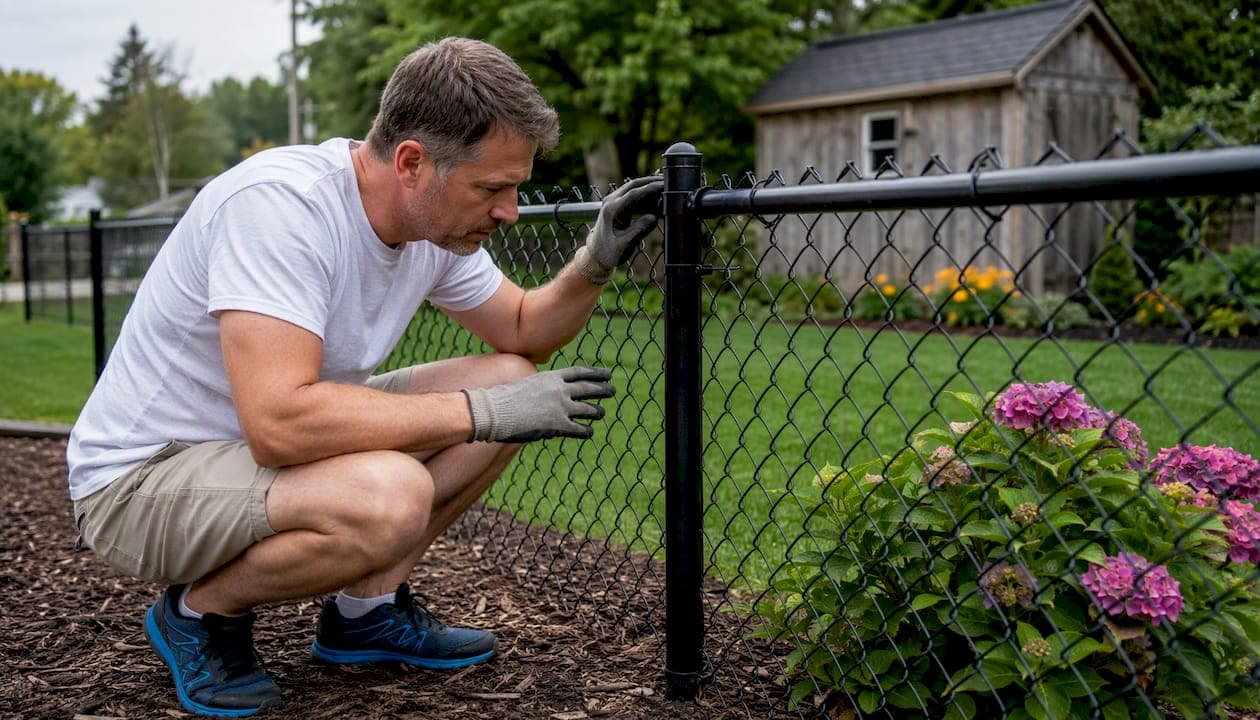
A black chain link fence is galvanized steel wire with a black PVC coating bonded over it. That combination gives you the structural strength of galvanized metal plus meaningful corrosion resistance and a cleaner look than bare silver mesh. For most homeowners and property managers who want a low-cost, low-visibility boundary fence, it's the right call. Installed costs typically run $12–$45 per linear foot depending on height, gauge, and site conditions, and a quality extruded-and-bonded (EBB) fabric will last 20–30 years in normal inland conditions. Get a materials quote if you're comparing DIY kits, but also get a pro-install quote from Advantagefencenj before you decide — the gap between the two is often smaller than homeowners expect.
Table of Contents
- What does a black chain link fence actually consist of?
- What parts and accessories do you need to budget for?
- How much does black chain link fencing cost?
- DIY versus professional installation: which makes sense for you?
- Why Advantagefencenj is the right installer for this project
- How long does a black vinyl-coated fence last, and what maintenance does it need?
- Key Takeaways
- Black chain link is the right fence for more situations than people think
- Get a free estimate from Advantagefencenj
What does a black chain link fence actually consist of?
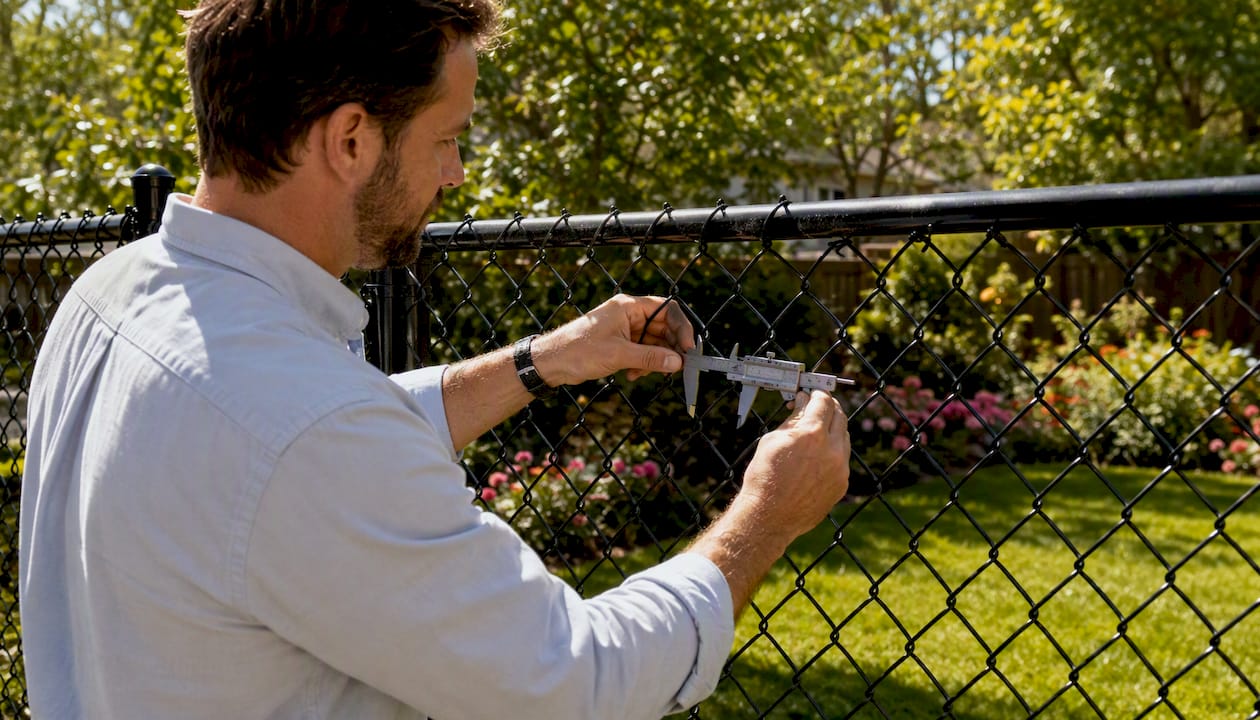
The base construction is straightforward: a galvanized steel core wire is drawn into a diamond-mesh pattern, then coated with black PVC. The coating method is where quality diverges sharply. Extruded-and-bonded (EBB) fabric bonds the vinyl directly to the zinc-coated wire, preventing peeling and stopping moisture from reaching the core. Budget "vinyl-only" or extruded-only options sold at big-box stores skip that bonding step, which means the coating can separate and trap moisture against the wire, accelerating corrosion from the inside out.
Pro Tip: When requesting quotes, write "EBB-grade black vinyl fabric" on every spec sheet. If a supplier or contractor can't confirm EBB, that's a signal they're pricing budget-grade material.
Wire gauge and fence height are the two spec numbers that drive cost and performance the most.
| Gauge | Common Use | Typical Height Options | Expected Lifespan (EBB) |
|---|---|---|---|
| 9-gauge | Commercial, high-traffic | 6', 8', 10' | 25–30+ years |
| 11-gauge | Residential standard | 4', 5', 6' | 20–25 years |
| 12-gauge | Economy/temporary | 4', 5' | 20–30 years |
Mesh size is almost always 2" diamond for residential and light commercial use. You'll also see references to Class 1 and Class 3 galvanizing on the core wire. Class 3 carries a heavier zinc coating and performs noticeably better in coastal or high-humidity environments, so it's worth specifying if you're within a few miles of saltwater.
What parts and accessories do you need to budget for?
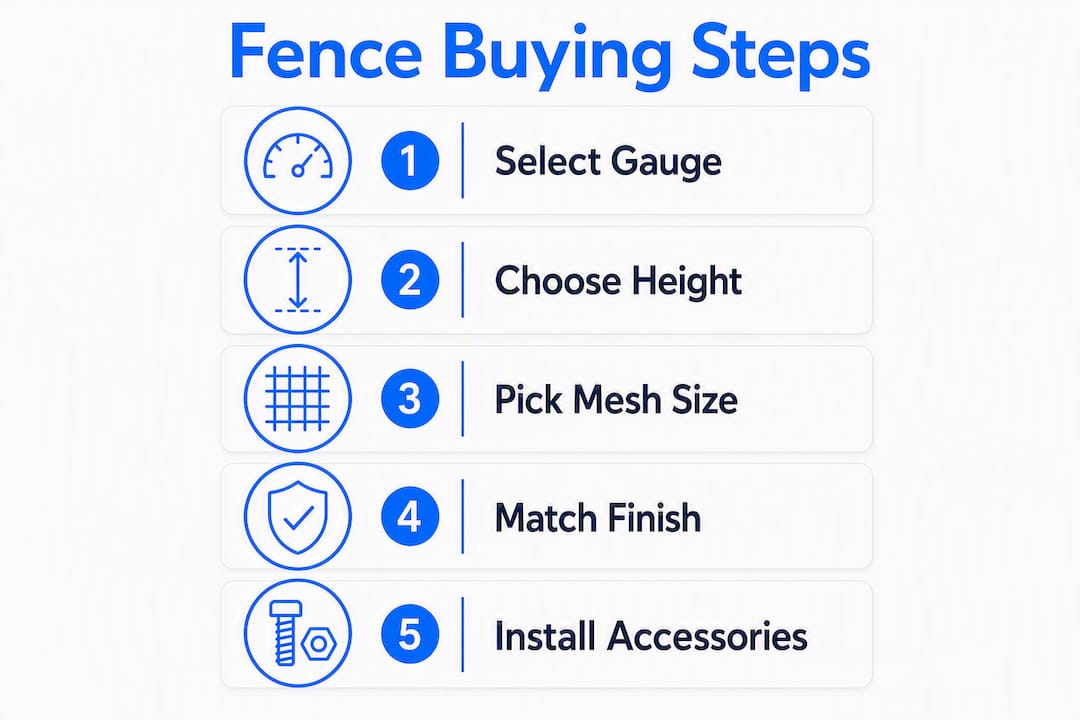
The fabric roll is only part of the purchase. A complete installation requires a full framework, and every component should match the black coating to avoid a mixed-finish look that HOAs routinely reject.
Must-have components:
- Line posts (spaced 10' on center, typically)
- Terminal posts (corner, end, and gate posts — heavier gauge than line posts)
- Top rail (connects line posts and supports the fabric)
- Tension bands and brace bands
- Tension bars (run through the fabric selvage at each terminal post)
- Rail end caps and loop caps
- Tie wire (secures fabric to top rail and line posts)
- Gate frames, hinges, latch hardware, and gate stops
Optional upgrades worth considering:
- Privacy slats (black vinyl, woven through the diamond mesh for partial or full privacy)
- Heavier-gauge mesh on high-traffic sections
- Black powder-coated gate hardware and hinges instead of galvanized
- Black powder-coated framework throughout for a fully matched finish
Matching the framework finish to the fabric matters more than most buyers realize. A black fabric on silver galvanized posts reads as unfinished. Many HOAs specifically prefer or mandate black vinyl-coated chain link for exactly this reason — the all-black system blends into landscaping in a way that bare galvanized never does.
How much does black chain link fencing cost?
Installed pricing for black vinyl-coated chain link runs $12–$30 per linear foot for standard residential heights (4'–6'), with commercial 9-gauge jobs pushing higher. Materials typically account for a portion of the cost per linear foot; labor adds additional cost, with terrain difficulty, gate count, and permit requirements affecting the total.
| Project Size | Height | Estimated Installed Range |
|---|---|---|
| 150 linear ft | 6' | $2,400–$6,000 |
| 200 linear ft | 5'–6' | $2,400–$6,000 |
| 200 linear ft | 4'–5' | $2,400–$6,000 |
How much does 200 ft of black chain link cost installed? Expect roughly $2,400–$6,000 depending on height, gauge, gate count, and whether you add privacy slats.
Black vinyl-coated chain link generally costs noticeably more than standard galvanized for the same height and gauge; the premium increases with project size. For most homeowners, the curb-appeal difference and the extended service life make that gap easy to justify.
The biggest cost drivers beyond material grade: gate count (each gate adds $150–$600+ depending on width and hardware), privacy slats (add $3–$8 per linear foot), and site difficulty like slopes, rocky soil, or limited access. DIY kits for typical yard sizes (150–500 ft) range from roughly $1,500 to $5,800 — but those figures exclude concrete, post-setting tools, and professional tensioning.
DIY versus professional installation: which makes sense for you?
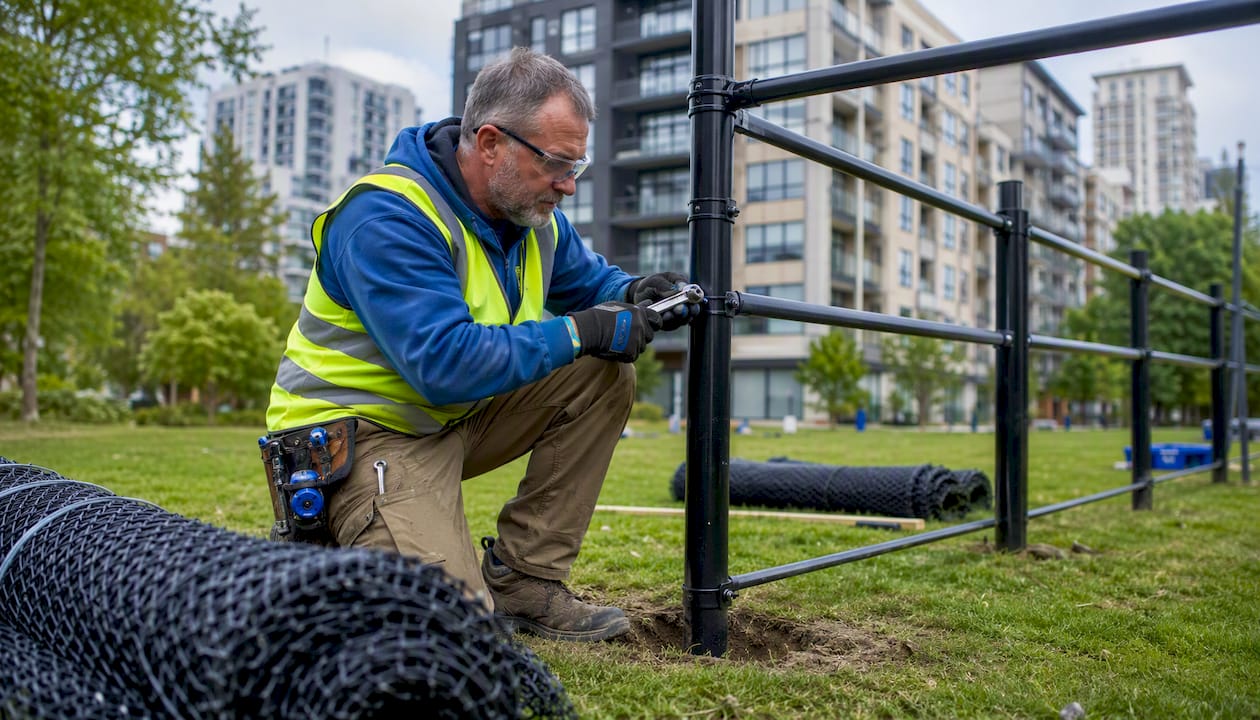
A professional installation covers more than just driving posts. Here's what a full contractor scope includes:
- Site survey and layout (measuring linear footage, marking post locations, identifying underground utilities)
- Terminal and line post setting with concrete footings at correct depth for local frost line
- Top rail installation and alignment
- Fabric unrolling, stretching, and tensioning to spec
- Tension bar attachment at all terminal posts
- Gate frame installation, hinge alignment, and hardware adjustment
- Tie wire attachment along top rail and line posts
- Site cleanup and final inspection
DIY kits can work for a flat, straightforward yard with no gates and a homeowner who owns a post-hole digger and a come-along tensioner. What kits typically leave out: concrete, the tensioning tools, post-setting labor, and any permit filing. An experienced crew completes a mid-sized residential job in a fraction of the time a DIY install takes across multiple weekends.
Questions to ask any contractor before signing:
- Do you pull permits, or is that on me?
- What gauge and coating grade is the fabric — specifically, is it EBB?
- What's the footing depth, and do you use concrete or driven anchors?
- What warranty do you offer on materials and workmanship?
- Can I see a local reference project or sample panel?
Red flags to walk away from:
- A quote that promises same-day completion on a large job with no concrete footings in clay or sandy soil
- No mention of EBB specification in the written quote
- Vague warranty language ("we stand behind our work") with no written terms
- No local references or photos of completed jobs
Why Advantagefencenj is the right installer for this project
Advantagefencenj handles the full scope of a black chain link installation — from design and material selection through permitting, concrete footings, and certified crew installation. That matters because the most common failure points in chain link fencing (sagging fabric, gate misalignment, premature corrosion) trace back to shortcuts in post anchoring and tensioning, not the fabric itself.
What Advantagefencenj brings to a project:
- EBB-grade black vinyl fabric specification as standard
- Permitting assistance so you're not navigating municipal requirements alone
- Concrete footings set to local frost-line depth
- Matched black powder-coated framework and hardware throughout
- Written material and workmanship warranty
- Site diagnostics that catch drainage issues, grade changes, and access constraints before installation starts
For a quote, have your linear footage estimate, gate count, and any access limitations ready. Property photos help. Advantagefencenj will walk the site, confirm specs, and deliver a written quote with material grade clearly stated.
How long does a black vinyl-coated fence last, and what maintenance does it need?
A quality EBB black vinyl-coated fence lasts roughly 20–30 years in typical inland conditions. Specify a Class 3 galvanized core and that range extends further, particularly in coastal or high-humidity environments where bare galvanized mesh degrades noticeably faster.
Annual maintenance is light:
- Hose off the fabric and framework once a year to remove dirt and salt buildup
- Inspect for scratched or chipped coating and touch up with vinyl-compatible paint to prevent moisture entry
- Check tension along the fabric — loose sections put stress on tie wires and gate posts
- Inspect gate hinges and latch hardware for corrosion or misalignment
- Replace any cracked or missing privacy slats before winter if you have them
On warranties: ask for written documentation covering both materials and workmanship, and confirm what voids coverage. Improper installation (inadequate footings, incorrect post spacing) typically voids manufacturer material warranties, which is another reason the installer's process matters as much as the product spec. Advantagefencenj provides written warranty terms and supports claims directly rather than routing homeowners back to a manufacturer.
Key Takeaways
A black vinyl-coated chain link fence with EBB fabric, matched black framework, and properly set concrete footings is the most cost-effective durable boundary fence for residential and light commercial properties.
| Point | Details |
|---|---|
| Always specify EBB fabric | EBB bonds PVC to the galvanized core, preventing peeling and extending service life to 20–30 years. |
| Budget for the full system | Posts, rails, gates, and hardware add significantly to fabric cost; match all components in black. |
| Black costs 20–35% more than galvanized | On a 200-ft project, that premium runs $400–$1,200 but buys better aesthetics and corrosion resistance. |
| Pro install beats DIY on most residential jobs | Correct footing depth and tensioning prevent sagging and gate issues that DIY kits can't guarantee. |
| Advantagefencenj handles the full scope | From EBB-grade material selection and permitting to concrete footings and written warranty coverage. |
Black chain link is the right fence for more situations than people think
Most homeowners who ask about black chain link are actually trying to solve an aesthetics problem, not just a security one. They've seen silver galvanized mesh and decided it looks industrial. What they haven't seen is a well-installed all-black system against a mature hedge or a dark wood line. It disappears. That's not a marketing claim — it's the reason black coating is frequently specified in residential developments and why HOA boards that would reject galvanized mesh often approve black vinyl without a second look.
The best-fit scenarios are yard boundaries where you want security without visual weight, pool perimeters where local code allows chain link, sport courts, and dog runs. For those use cases, black vinyl-coated chain link beats wood on cost and maintenance, and beats aluminum fencing on price per linear foot when budget is the constraint.
Where it's not the right call: if full privacy is the primary goal, no amount of slats fully replaces a solid wood fence or a vinyl privacy panel. And if the property is in a historic district with strict material rules, check local ordinances before specifying chain link at all.
The one thing I'd push back on is the assumption that black chain link is a budget compromise. Specified correctly — EBB fabric, Class 3 core, matched black framework, proper footings — it's a 25-year fence that costs less installed than most wood alternatives and requires almost no upkeep. That's not a consolation prize. For the right property, it's the best fence you can buy.
Get a free estimate from Advantagefencenj
Spending hours comparing per-foot prices online gets you a ballpark. A site visit from Advantagefencenj gets you an accurate written quote with EBB-grade material specs, footing depth confirmed for your soil type, and a clear timeline.
Before you reach out, pull together three things: a rough linear footage estimate (walk the perimeter or use a satellite measurement tool), your gate count and preferred widths, and any access constraints like narrow side yards or grade changes. That information lets Advantagefencenj turn around a detailed quote faster and eliminates the back-and-forth that delays most projects.
Request a site estimate and expect a written quote that specifies material grade, footing method, warranty terms, and project timeline. No vague line items, no surprise upgrades at installation. Visit Advantagefencenj to get started.