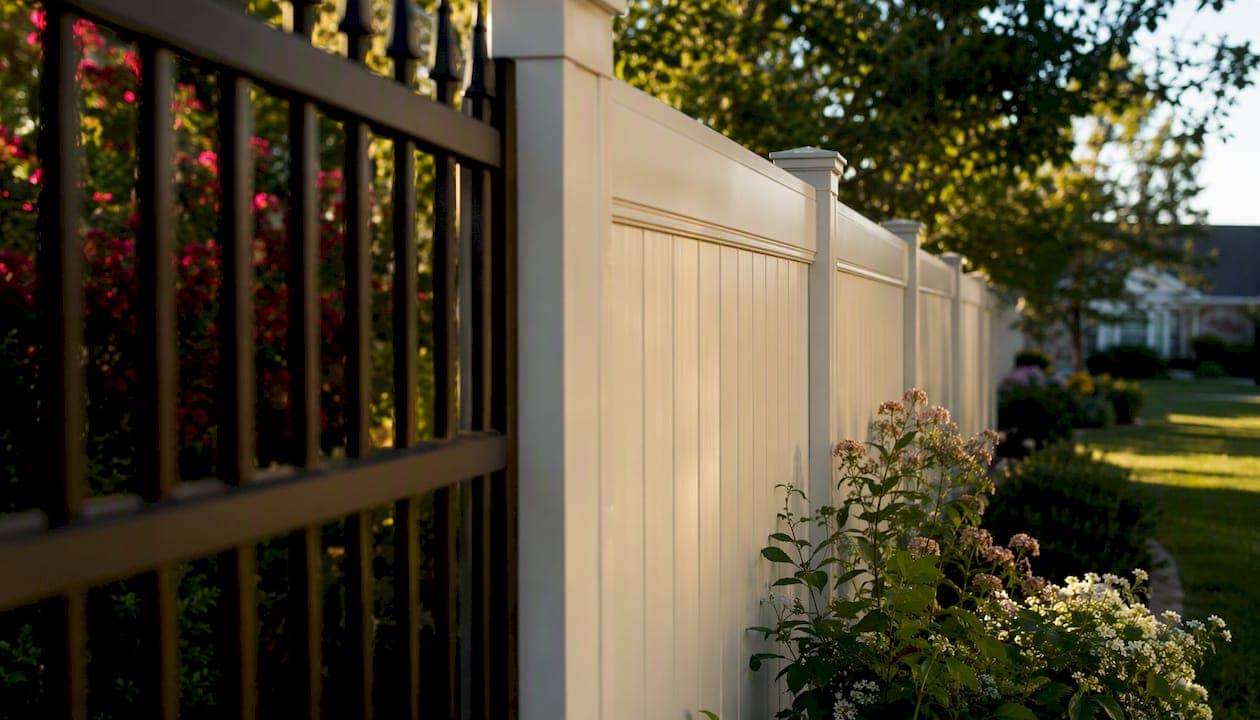
For most homeowners, aluminum is the better long-term investment. It lasts 30–50+ years, holds up in coastal and cold climates, and costs less to repair when something goes wrong. Choose vinyl when full privacy is non-negotiable and your budget is tighter upfront — solid-panel vinyl delivers a look aluminum simply cannot match without expensive add-ons.
Quick decision guide:
- Pick aluminum if you want maximum lifespan, live near the coast or in a climate with temperature extremes, or prefer an open ornamental look with minimal upkeep over decades.
- Pick vinyl if privacy is your primary goal, you want a fence that looks clean without painting, and you plan to stay in the home long enough to recoup the slightly higher material cost.
- Call a pro for a site visit if your lot slopes, sits in a flood zone, has HOA restrictions, or borders a pool — these factors change both material choice and installed cost significantly.
Typical installed costs run $2,000–$5,000 for aluminum and $2,500–$6,000 for vinyl on a standard residential project. Advantagefencenj installs both materials and can walk you through which option fits your yard, your HOA, and your budget before you commit to anything.
Table of Contents
- How does vinyl fence vs aluminum actually compare?
- What you need to know about vinyl fencing
- What you need to know about aluminum fencing
- What does a fence actually cost? Real budget examples
- How much maintenance do vinyl and aluminum actually need?
- Installation: what changes based on your site
- Real project examples from Advantagefencenj
- What fence removal and replacement actually costs
- Key Takeaways
- A fence pro's honest take on this decision
- Advantagefencenj can handle your vinyl or aluminum install
- Sources and further reading
How does vinyl fence vs aluminum actually compare?
The table below maps the dimensions homeowners use most when making this decision. Every range comes from cited installer and industry sources.
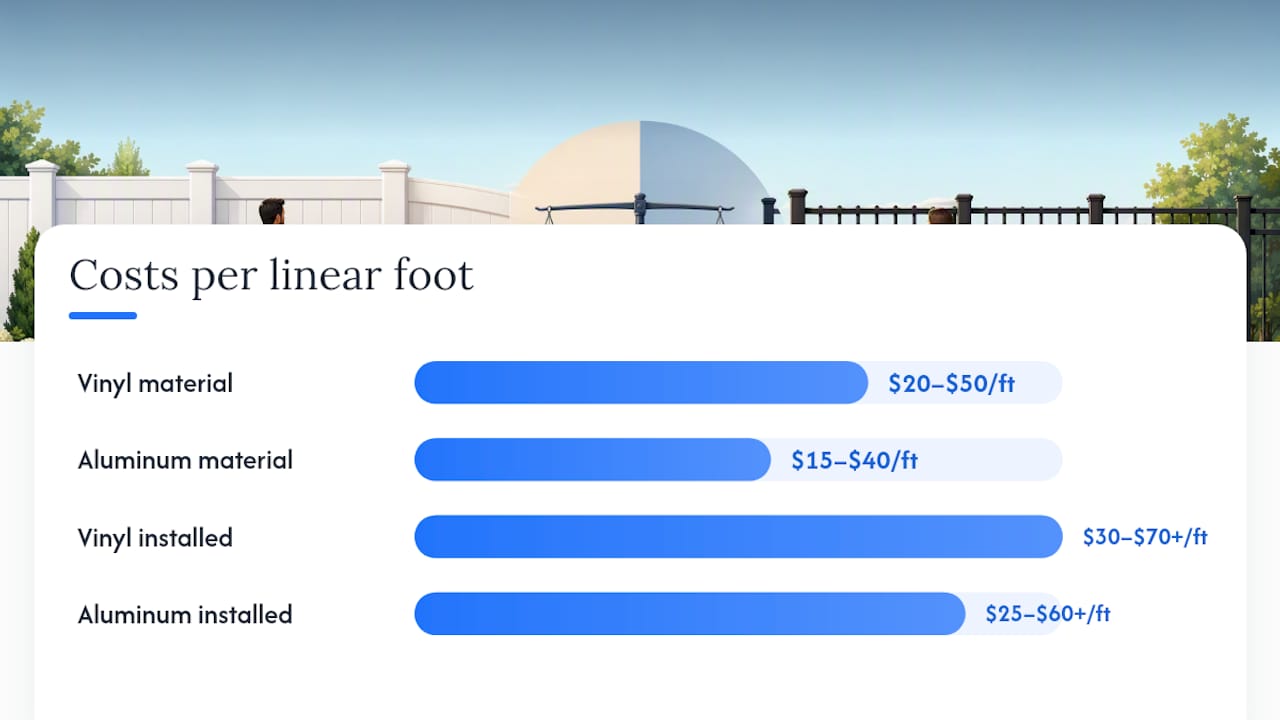
| Dimension | Vinyl | Aluminum |
|---|---|---|
| Material cost (per linear foot) | $20–$50 | $15–$40 |
| Typical installed cost (per linear foot) | $30–$70+ | $25–$60+ |
| Expected lifespan | 20–30 years | 30–50+ years |
| Maintenance frequency | Wash 1–2x per year; treat mildew | Occasional rinse; inspect hardware annually |
| Privacy options | Full solid-panel privacy standard | Open picket standard; slat inserts add cost |
| Installation difficulty (DIY) | Moderate — precise post spacing required | Easier — panels rack on slopes |
| Repairability | Cracked panel = full panel replacement | Dented section = part swap + touch-up paint |
| Typical warranty | 20–30 years (material); varies by installer | 20–30 years (finish + material); varies |
| Best use cases | Privacy yards, pet containment, suburban lots | Coastal, ornamental, sloped lots, long-term value |
| Recyclability | Limited (PVC recycling is restricted) | Fully recyclable aluminum |
Bottom line: Aluminum costs less per foot, lasts longer, and repairs more cleanly. Vinyl wins on privacy and initial visual simplicity. Your lot and your priorities decide the rest.
What you need to know about vinyl fencing
Vinyl fence is made from PVC (polyvinyl chloride) extruded into hollow rails, posts, and pickets or solid privacy panels. Common styles include full-privacy panels (the most popular residential choice), semi-privacy, picket, and ranch rail. The material is UV-stabilized at the factory, which is why it looks clean for years without paint — but that stabilization has limits.
What vinyl costs and how long it lasts
Material costs run $20–$50 per linear foot, with premium privacy panels at the top of that range. Add labor and you're typically looking at $30–$70+ per foot installed, depending on height, terrain, and local labor rates.
Quick budget example: A 150-foot privacy vinyl fence in materials alone runs roughly $3,000–$7,500. Installed, that same project typically lands between $4,500 and $10,500 before permits or removal of an existing fence.
Vinyl typically lasts 20–30 years under normal conditions. Premium grades with higher UV inhibitor content can push past that range, but exposure to extreme heat or prolonged direct sun accelerates yellowing and brittleness.
Vinyl pros and cons
Advantages:
- Full privacy with no gaps — solid panels block sightlines completely
- No painting or staining required; looks clean with basic washing
- Good sound dampening compared to open-picket alternatives
- Lower upfront material cost than premium aluminum in many configurations
Disadvantages:
- Can yellow, warp, or become brittle in extreme heat or cold — a real concern in climates with harsh winters or intense summer sun
- A cracked or broken panel requires full panel replacement, not a patch
- PVC is difficult to recycle; most municipal programs don't accept it
- Hollow construction means it can flex or crack under heavy impact
Vinyl warranties
Most manufacturers offer 20–30-year limited warranties on the material itself. Read the fine print: many cover manufacturing defects but exclude UV discoloration after a set period, and installation workmanship warranties are separate. Always ask your installer for both documents before signing a contract.
What you need to know about aluminum fencing
Aluminum fence is built from extruded aluminum alloy sections — typically hollow pickets welded or screwed into horizontal rails, then finished with a powder coat or dip coat. The powder coat is baked on, which is what gives aluminum its long-term color retention and corrosion resistance. Common styles include ornamental picket (the classic look), flat-top residential, and louvered or slat-insert privacy options.
Aluminum cost and lifespan
Material costs run $15–$40 per linear foot, with premium grades toward the top. Installed, most residential aluminum projects land in the $25–$60+ per foot range depending on height and site conditions. A complete aluminum install for a typical yard often runs $2,000–$5,000.
Lifespan is where aluminum pulls ahead clearly: 30–50+ years with proper installation and a quality finish. The "+" matters — well-maintained aluminum fences on residential properties regularly outlast the homeowners who installed them.
Aluminum pros and cons
Advantages:
- Significantly longer lifespan than vinyl in most climates
- Performs well in coastal and cold climates — resists salt air corrosion and doesn't become brittle in freezing temperatures
- Dents rather than cracks; damaged sections can often be repaired with part swaps and touch-up paint rather than full replacement
- 100% recyclable at end of life
- Rackable panel systems handle sloped lots without custom fabrication
Disadvantages:
- Open-picket design provides little privacy without slat inserts, which add cost
- Can dent under significant impact (though denting is generally easier to address than cracking)
- Premium powder coat finishes cost more upfront; cheap finishes chip and fade faster
Pro Tip: Ask your installer for the powder coat specification — specifically the mil thickness and whether a primer coat was applied before the topcoat. A single thin coat on bare aluminum will start chipping within a few years. A primed, double-coat finish is what separates a 30-year fence from a 10-year one.
Finish quality is the single biggest determinant of how aluminum ages. Two fences that look identical on installation day can look completely different a decade later based solely on how the powder coat was applied.
Aluminum warranties
Manufacturer warranties on aluminum typically cover 20–30 years for both the material and the finish, though finish coverage often has conditions around cleaning and maintenance. Installer workmanship warranties vary — one to five years is common. As with vinyl, get both in writing.
What does a fence actually cost? Real budget examples
The per-foot ranges above are useful for ballparks, but a line-item budget is what you actually need before calling for quotes.
Per-foot cost summary
| Option | Material only (per ft) | Installed (per ft) |
|---|---|---|
| Basic aluminum picket | $15–$25 | $25–$40 |
| Premium aluminum ornamental | $30–$40 | $25–$60+ |
| Basic vinyl picket | $20–$30 | $25–$40 |
| Premium vinyl privacy | $40–$50 | $30–$70+ |
Example 1: 150-ft basic aluminum picket
| Line item | Estimated cost |
|---|---|
| Materials (150 ft × $20/ft avg) | $3,000 |
| Labor (150 ft × $15/ft avg) | $2,000 |
| Concrete for posts | $200–$400 |
| Permit (varies by municipality) | $50–$150 |
How much maintenance do vinyl and aluminum actually need?
Both materials are genuinely low-maintenance compared to wood. The difference is in what kind of attention each one needs and what happens when you skip it.
Vinyl maintenance checklist
- Wash the fence once or twice a year with a garden hose and mild detergent — a soft brush handles stubborn dirt without scratching the surface.
- Inspect shaded or low-lying sections for mildew and algae, which appear as dark streaks or green patches. A diluted white vinegar solution or a commercial vinyl cleaner removes most growth without damaging the finish.
- Check for UV yellowing annually, especially on south-facing panels that get full afternoon sun.
- After any significant storm, walk the fence line and check for cracked pickets or panels that shifted in the wind.
Vinyl needs periodic washing and mildew treatment — skip it for a few seasons and the discoloration becomes much harder to reverse.
Aluminum maintenance checklist
- Rinse with a garden hose after heavy storms, especially in coastal areas where salt spray accumulates.
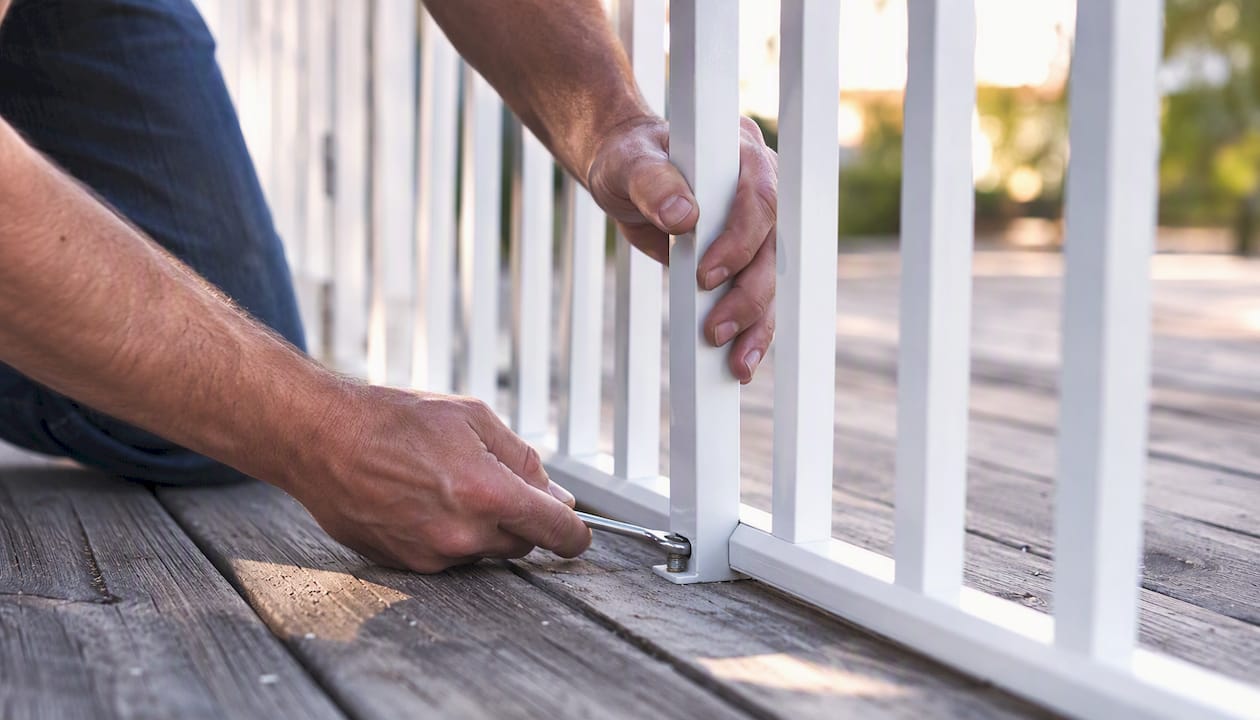
- Inspect the powder coat annually for chips or scratches. Small chips should be touched up with manufacturer-matched touch-up paint before rust can form at the exposed metal.
- Tighten any loose hardware — screws and brackets can work loose over time, especially on gates.
- Check post bases for standing water or soil erosion, which accelerates corrosion at the ground line.
Aluminum typically needs only an occasional rinse and hardware check to stay in good shape for decades.
Repair costs and scenarios
When vinyl cracks or breaks, the repair is almost always a full panel or section replacement. Depending on the panel size and style, that runs roughly $100–$400 per panel for materials, plus labor. Matching older vinyl can be difficult if the manufacturer has discontinued the color or profile.
Aluminum damage is more forgiving: a bent picket or dented rail can often be swapped out individually, and touch-up paint handles minor finish damage. A single picket replacement might run $50–$150 including labor, compared to a full vinyl panel swap.
Warranty-claim tip: Keep records of your annual cleaning and maintenance. Many manufacturer warranties require documented upkeep to honor a claim. A photo log taken each spring takes five minutes and can save you thousands.
Installation: what changes based on your site
Neither material is a pure DIY project for most homeowners, but aluminum is more forgiving if you're determined to try.
DIY friendliness
Aluminum panel systems are designed to rack — meaning the panels can angle to follow a slope without custom cutting. That makes them significantly more manageable on uneven terrain. Installer and homeowner forums consistently note that vinyl requires precise post spacing and expansion gaps to prevent buckling, while aluminum panels are more forgiving on slopes and irregular ground.
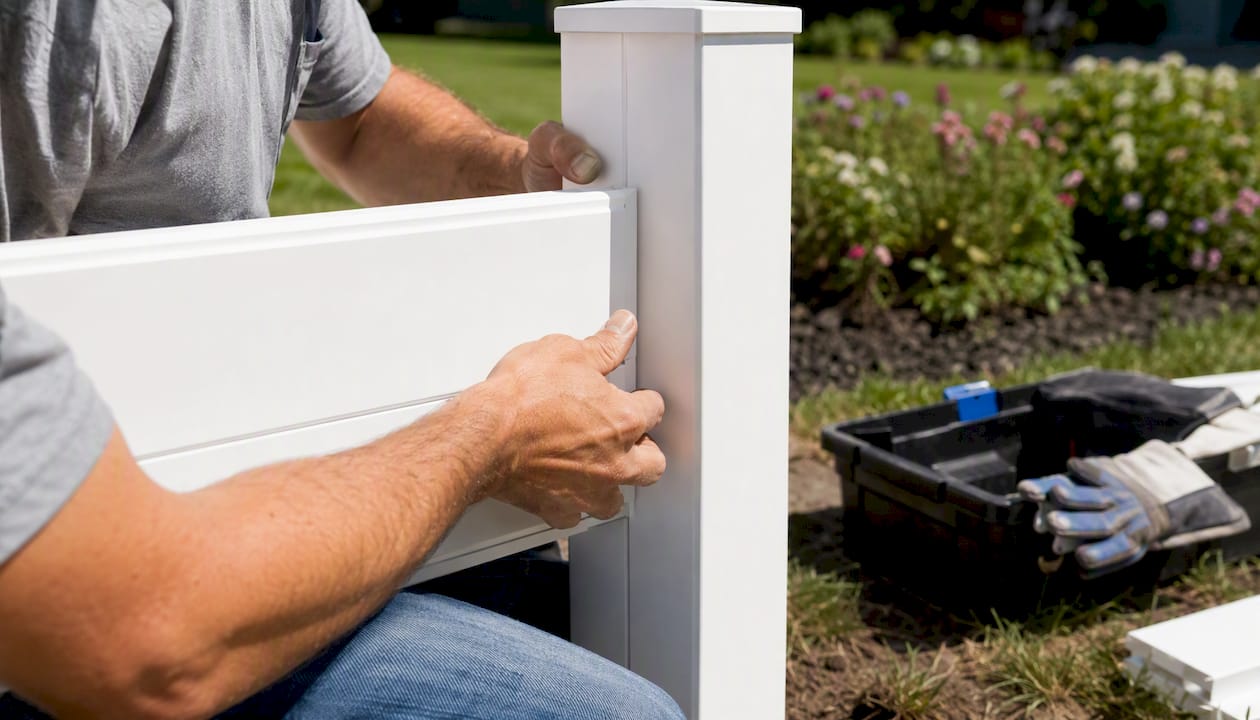
Vinyl installation is sensitive to post alignment. If posts are even slightly off-plumb or inconsistently spaced, panels won't seat correctly, and the gaps or misalignment become obvious. Expansion gaps between panels are also critical — vinyl expands and contracts with temperature, and a fence installed without proper gaps will buckle in summer heat. For vinyl installation, the same precision that applies to vinyl siding expansion gaps applies to fence panels: the material moves, and the install has to account for it.
Sloped lots
Aluminum wins here. Rackable aluminum panels follow the grade naturally. Vinyl on a slope typically requires a stepped installation (panels drop in level increments), which leaves triangular gaps at the bottom — a problem if you have pets or small children.
Pro Tip: On lots with more than a 6-inch grade change over a fence section, ask your installer specifically whether they plan to rack the panels or step them, and request photos of past sloped installs. Stepped vinyl on a steep slope can look choppy and leave gaps that defeat the purpose of a privacy fence.
Permits and HOA
Most municipalities require a permit for any fence over a certain height (commonly 4–6 feet depending on location) or for fences adjacent to pools. HOA rules add another layer: setback requirements, approved colors, maximum height, and sometimes approved materials. Pull your HOA covenants before you get quotes — some HOAs prohibit vinyl entirely, and others require specific aluminum colors.
Pool fences carry their own requirements under local building codes: minimum height (typically 48 inches), self-closing gates, and in some jurisdictions, specific sightline requirements that affect which fence styles are permitted. Always call 811 before any post digging to locate underground utilities.
Questions to ask your contractor during a site estimate
- What is the post embed depth for my soil type, and will you use concrete?
- What powder coat specification does the aluminum carry — mil thickness, primer coat, and manufacturer?
- What does the warranty cover — material, finish, and installation workmanship — and what is the claim process?
- How do you handle expansion gaps on vinyl, and what happens if a panel cracks in year three?
- Will you pull the permit, or is that on me?
- Have you done utility locates, and can I see the locate ticket before digging starts?
- What is your policy on grade adjustments — do you step or rack on sloped sections?
Red flags to watch for
- A quote with no line-item breakdown — you can't compare vague totals.
- No written warranty documentation at contract signing.
- An installer who skips the utility locate or tells you it's unnecessary.
- Unusually low bids that don't specify post depth, concrete, or finish grade — these details get cut first when a contractor is squeezing margin.
Check any installer's BBB profile and ask for references from projects completed in the last two years, not just the last decade.
Real project examples from Advantagefencenj
These examples reflect the kinds of projects Advantagefencenj handles regularly and the cost patterns homeowners encounter.
Suburban privacy yard, vinyl privacy panel install: A homeowner in a suburban neighborhood needed a full-perimeter privacy fence on a flat lot. The project used 6-foot premium vinyl privacy panels on a 180-foot run. Materials, labor, concrete, and permit came to approximately $11,000–$13,000 total. The lesson: flat lots keep labor costs predictable, but premium panel grades add up fast — the homeowner upgraded from a basic to a mid-grade UV-stabilized panel after seeing samples, which added roughly $1,200 to the total but extended the expected service life noticeably.
Coastal property, aluminum ornamental picket: A property near the shore needed a front-yard ornamental fence that could handle salt air without corroding. A 120-foot aluminum picket install with a marine-grade powder coat finish ran approximately $7,500–$9,000 installed. The finish specification mattered here: standard residential powder coat was quoted $1,500 less, but the homeowner chose the upgraded finish after learning how quickly standard coatings degrade in coastal conditions. The aluminum fencing options Advantagefencenj carries include marine-grade finish specifications for exactly this scenario.
Sloped lot, hybrid install: A backyard with a significant grade change used aluminum rackable panels along the sloped sections and vinyl privacy panels on the flat rear portion. The hybrid approach kept costs reasonable while solving the slope problem without stepped gaps. Total for 200 feet (mixed material) ran approximately $14,000–$17,000 installed, including a double gate. The takeaway: mixing materials on a single project is sometimes the most practical answer, and a good installer will tell you that rather than forcing one material everywhere.
For vinyl fencing options and aluminum solutions, Advantagefencenj offers site surveys to assess your specific lot before any material commitment.
What fence removal and replacement actually costs
This is the subtopic most homeowners skip until they're staring at a quote for a new fence and realize the old one has to come down first.
Fence removal typically runs $3–$8 per linear foot, depending on the material, post depth, and whether concrete footings need to be extracted. A 150-foot fence removal can add $450–$1,200 to a project before a single new post goes in. Concrete footing removal is the expensive part — some installers cut the old post at grade and pour new concrete around it, which saves money but only works when the old footing is in good condition and correctly positioned.
Vinyl replacement has an added wrinkle: if the manufacturer has discontinued the color or profile, you may not be able to replace individual sections. That forces a full fence replacement rather than a partial repair, which is why matching your vinyl to an actively manufactured product line matters when you buy.
Aluminum replacement is more modular. Individual pickets, rails, and sections are easier to source and swap, which is one reason aluminum's long-term cost of ownership tends to run lower even when the upfront price is similar.
When budgeting for a new fence, always add a removal line item to your estimate request. An installer who doesn't ask about the existing fence is leaving a cost variable unaddressed.
Key Takeaways
Aluminum outlasts vinyl by 10–20+ years on average and repairs more cleanly, making it the stronger long-term value for most homeowners — but vinyl remains the only practical choice when full privacy is the primary goal.
| Point | Details |
|---|---|
| Lifespan gap is significant | Aluminum lasts 30–50+ years; vinyl typically 20–30 years under normal conditions. |
| Upfront cost is close | Aluminum materials run $15–$40/ft; vinyl runs $20–$50/ft — the gap narrows at premium grades. |
| Privacy drives the vinyl case | Solid-panel vinyl delivers full privacy that aluminum cannot match without costly slat inserts. |
| Climate and slope favor aluminum | Coastal salt air, cold winters, and sloped lots all suit aluminum's rackable, corrosion-resistant design. |
| Advantagefencenj installs both | Site surveys, permit assistance, and material guidance are available for vinyl and aluminum projects. |
A fence pro's honest take on this decision
The vinyl-vs-aluminum debate gets framed as a cost question, but the homeowners who regret their choice almost always picked the wrong material for their site, not their budget. A vinyl privacy fence on a sloped lot with poor drainage is a maintenance headache within five years. An aluminum picket fence for a homeowner who needed privacy is a frustration from day one.
What gets underestimated consistently is post installation. The fence panels get all the attention in a quote, but the posts are what determine whether a fence lasts 10 years or 40. Post embed depth, concrete mix, and drainage at the base of each post matter more than the brand of panel attached to them. A premium vinyl fence on shallow posts in clay soil will lean and shift. A basic aluminum fence on properly set posts in well-drained concrete will stand straight for decades.
The other thing worth saying plainly: the cheapest quote is almost never the best value in fencing. The margin gets cut somewhere — usually in post depth, concrete volume, or finish grade. Ask the specific questions listed in this article, get the answers in writing, and compare specs rather than totals. A $500 difference in quotes often reflects a $2,000 difference in what you'll spend on repairs five years from now.
Advantagefencenj can handle your vinyl or aluminum install
Choosing between vinyl and aluminum is easier when someone who has installed both on lots like yours can look at the site and give you a straight answer. Advantagefencenj handles the full project: site survey, material selection, permit filing, and installation for residential, commercial, and recreational properties.
For vinyl, that means privacy panel styles in multiple heights and grades, with UV-stabilized options suited to New Jersey's climate swings. For aluminum, it means ornamental and residential picket styles with finish specifications matched to your exposure — including coastal-grade powder coat for properties near the water.
To get an accurate quote, have these ready when you call: your property's approximate linear footage, photos of the lot (especially any slopes or drainage issues), your HOA rules if applicable, and your preferred style. That information lets Advantagefencenj give you a real number, not a ballpark.
Request a site estimate or browse the full range of fencing solutions to see what fits your property before you commit.
Sources and further reading
Research and cost data used in this article:
- Aluminum vs Vinyl Fence: Which Is Better for Your Property? - Flooring Clarity
- Vinyl vs. Aluminum Fencing: An In-Depth Comparison - Aluminum Fences Direct
- Aluminum Fence vs Vinyl Fence: Which Lasts Longer? - My Modern Yard
- Aluminum vs. Vinyl Fencing: Which is the Better Option? - Barrier Boss
- Vinyl vs Aluminum Fence: Angi article
- Aluminum vs Vinyl Fence: Which Is Better for Your Property? - Hugh Aluminum
- Aluminum Fences Direct | BBB profile
- Fencing - Aluminum or PVC? : r/HomeImprovement (Reddit)
Advantagefencenj resources:
- Aluminum Fencing — Advantagefencenj — product options and finish specifications
- Vinyl Fencing — Advantagefencenj — privacy panel styles and available grades
- Aluminum Fence Cost Guide — Advantagefencenj Blog — detailed budgeting and regional pricing
- Services — Advantagefencenj — site surveys, permitting, and installation