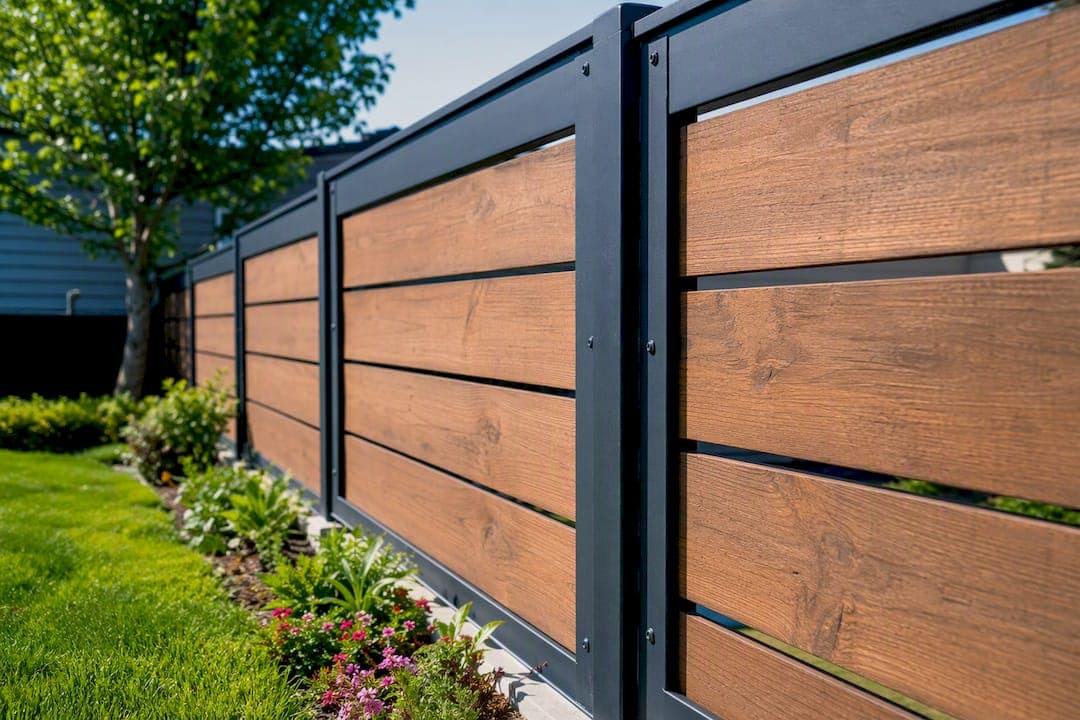
A mixed material fence combines two or more materials, for example, a metal frame with wood or vinyl infill, to deliver both architectural style and structural permanence. Instead of relying on a single material to handle looks and load-bearing duty, you split the job: metal or aluminum carries the structure, while wood, vinyl, or composite carries the visual character.
Homeowners choose this route for three reasons:
- Durability — a rigid frame resists sagging in ways a wood-only fence rarely does
- Design flexibility — you can pair a modern slat pattern with a frame that won't warp
- Lower long-term maintenance — fewer components need annual sealing or replacement
A mixed material fence makes the most sense when you want a specific look (horizontal slats, a semi-private pattern, a coastal aesthetic) but also want the fence to still look straight in year twelve, not just year two.
Key Takeaways
A mixed material fence pairs a structural metal or aluminum frame with a design-focused infill like wood, vinyl, or composite to cut long-term sagging while keeping upkeep low.
| Point | Details |
|---|---|
| Match combo to site | Coastal and poolside lots favor aluminum plus vinyl; wind-exposed lots need a rigid metal frame regardless of infill. |
| Fastener choice matters most | Corrosion-resistant or stainless hardware at material junctions prevents the rust streaking and galvanic corrosion that cause most early failures. |
| Leave room for movement | Vinyl, composite, and wood all expand and contract differently, so mounting hardware needs slotted holes or gap allowances. |
| Maintenance is compartmentalized | Wood infill needs annual sealing while metal frames and vinyl or composite infill need little beyond periodic inspection. |
| Advantage Fence handles the full build | Advantage Fence manages design, material selection, permitting, and installation for mixed material fences across South Jersey. |
Table of Contents
- What Are the Best Mixed Material Fence Combinations?
- Which Design Styles Work Best With Mixed Materials?
- How Durable Are Mixed Material Fences Compared to Single-Material Ones?
- What Drives the Cost of Installing a Mixed Material Fence?
- How Often Does a Mixed Material Fence Need Maintenance?
- How Do You Bond Different Fence Materials So They Last?
- How Can You Customize a Mixed Material Fence to Match Your Home?
- What Problems Are Unique to Mixed Material Fences?
- Are Mixed Material Fences Environmentally Sustainable?
- Where Does Each Fence Combination Work Best?
- Why We Recommend a Contractor for Mixed Material Fence Projects
- Ready to Plan Your Mixed Material Fence?
- Frequently Asked Questions
- Sources
What Are the Best Mixed Material Fence Combinations?
Three combinations dominate the market, and each solves a different problem.
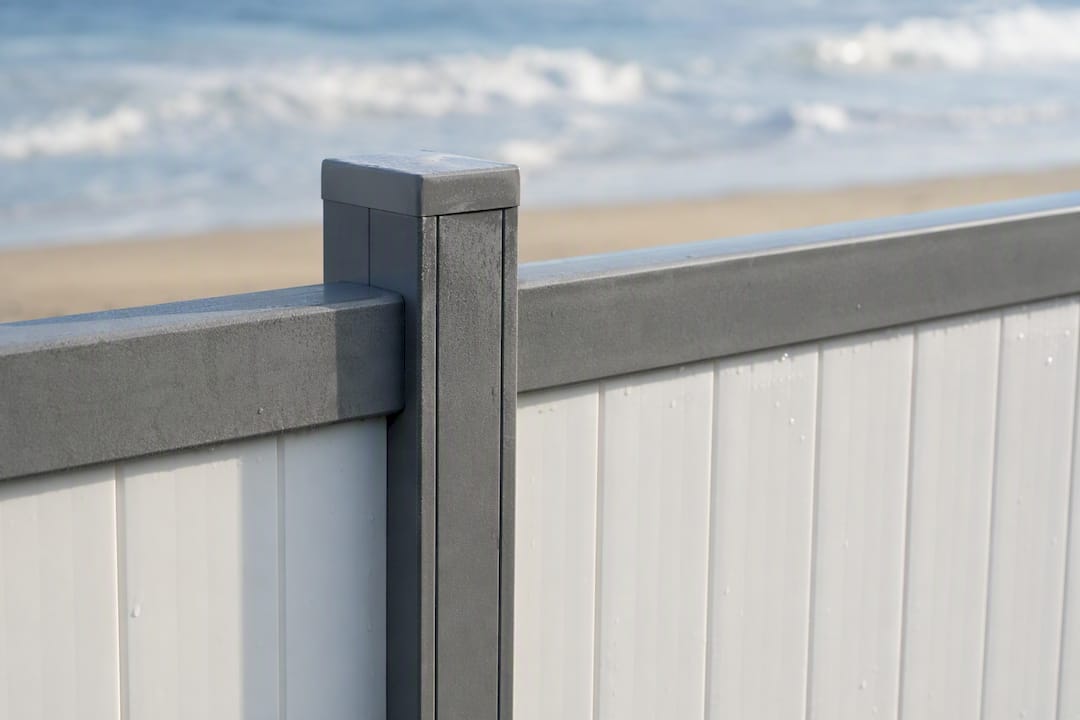
Aluminum + vinyl is the low-maintenance pairing. An aluminum frame holds vinyl panels in place, either surface mounted or set in-ground, and the whole system resists rust, rot, and warping better than almost anything else on this list. It's promoted heavily for coastal and poolside settings because neither material corrodes near salt air or chlorine splash.
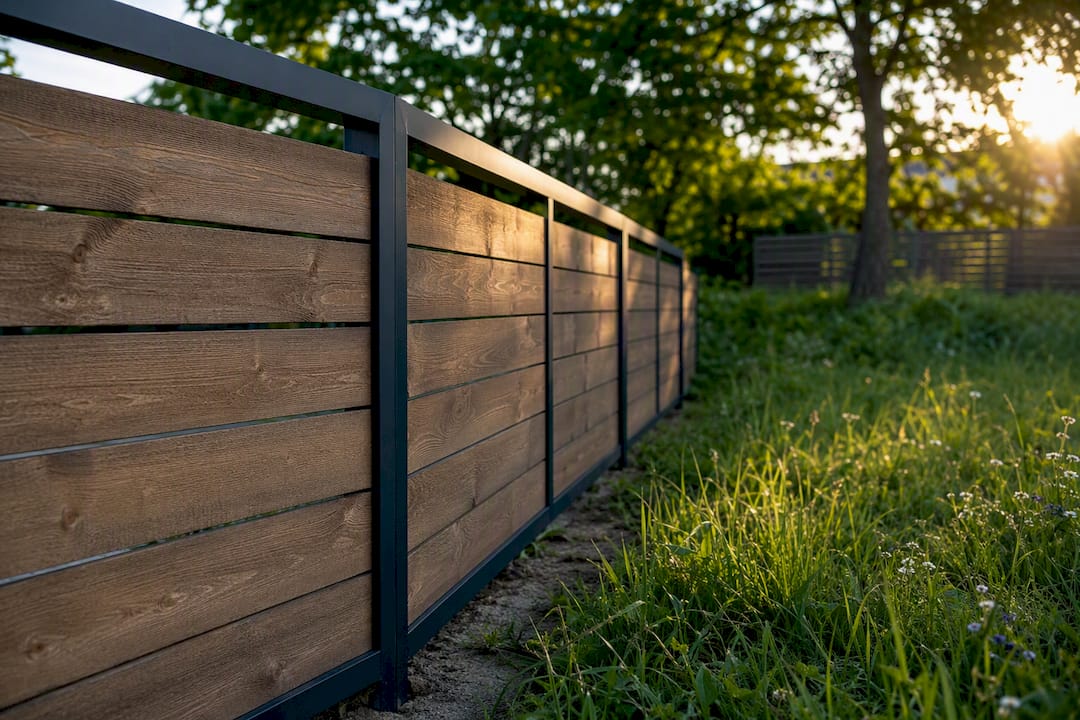
Wood + metal is the classic look with a structural upgrade. A steel or aluminum frame keeps the wood boards off the ground and adds a rigid skeleton, which directly reduces the sagging and warping that plagues traditional wood-post fences after a few wet seasons. You still get real wood grain and the option to stain it any color you want.
Composite + metal splits the difference. Composite infill (recycled wood fiber and plastic) never needs sealing, and pairing it with a powder-coated metal frame gives you a fence that looks like natural wood without the annual upkeep.
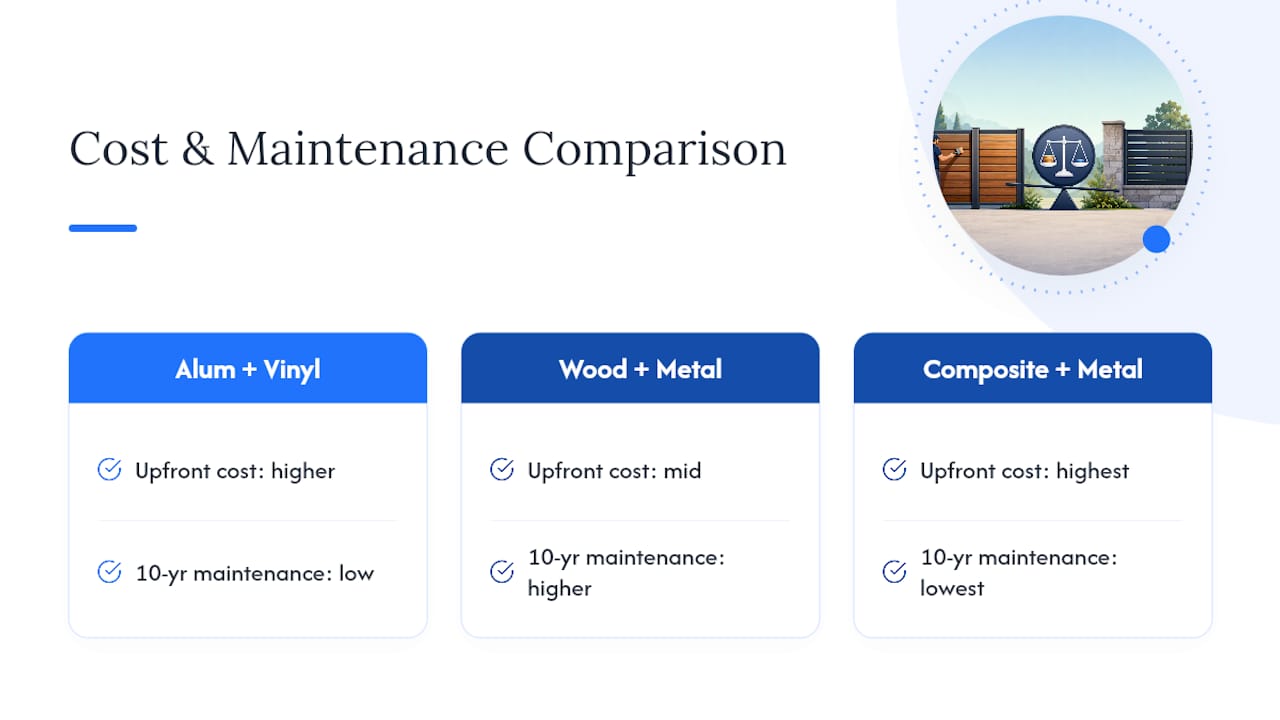
Cost runs roughly in that same order: wood + metal tends to land in the middle, aluminum + vinyl often costs more upfront but less over ten years, and composite + metal sits at the higher end initially with the lowest lifetime maintenance bill.
Pro Tip: Wherever two different metals meet, ask your installer about galvanic corrosion. Mixing raw steel hardware with aluminum framing in a wet climate can cause one metal to corrode faster than it would alone. Stainless steel or coated fasteners solve this cheaply.
Which Design Styles Work Best With Mixed Materials?
Certain patterns show up again and again because they solve a design problem that single-material fences struggle with.
- Horizontal slat with a metal frame. This is the look driving most modern renovation photos right now. Wood or composite boards run horizontally inside a steel or aluminum frame, giving you clean lines without the board-to-board sagging you'd get from an all-wood horizontal build.
- Vertical vinyl panels in aluminum frames. A tighter, more formal privacy look. The aluminum frame keeps the panels dead straight over long runs, which matters more with vertical vinyl than almost any other configuration.
- Semi-private slat fences. Boards spaced with small gaps let light and airflow through while still blocking direct sightlines, a favorite for yards that get shaded by a tall privacy fence otherwise.
- Decorative toppers and alternating-material runs. Lattice caps, metal ball-cap posts, or alternating wood-and-metal panel runs break up a long fence line visually. Common pairings include cedar or pine boards set in steel frames, or corrugated metal accent panels for an industrial-rustic look.
The pattern across all four: the frame or structure stays consistent, while the infill does the visual work, which is exactly why these hold up better than fences built from a single material trying to do both jobs.
How Durable Are Mixed Material Fences Compared to Single-Material Ones?
Durability is really a question of which material handles which stress. Metal framing brings rigidity and rot resistance, and a powder-coated finish protects it from rust for years without repainting. That's the backbone. Wood brings warmth and a natural look but needs sealing every year or two, and it will eventually rot if it sits in wet soil or against a post that traps moisture. Vinyl and composite bring genuine moisture resistance, but they expand and contract with temperature swings, so installers need to leave room for thermal movement at panel joints rather than fastening everything rigid.
Manufacturers now push reinforced composite panels and powder-coated metal specifically because that pairing eliminates the sagging and bowing that plague wood-only builds over time. The frame does the structural work, so the infill never has to.
A few things worth knowing before you pick finishes:
- Ask for marine-grade or stainless fasteners anywhere metal touches metal or metal touches wood.
- Powder coating outperforms standard paint on metal framing exposed to weather.
- Composite infill carries manufacturer warranties in many cases, which single-species wood typically doesn't.
- In wildfire-prone regions, some manufacturers now offer fire-rated panel options, though you should verify local code requirements before assuming any product qualifies.
The tradeoff is upfront cost. A hybrid build with quality hardware and coated metal costs more on day one than a basic wood fence, but it usually costs less over a ten-year span once you account for board replacement and repainting.
What Drives the Cost of Installing a Mixed Material Fence?
Five factors decide most of your budget, and they matter in roughly this order.
- Posts and footings. Metal posts set in concrete cost more upfront than wood posts but carry the entire fence's structural load, so skimping here undermines everything else.
- Metal framing. Aluminum framing costs more than steel in most cases but resists rust without ongoing paint maintenance.
- Infill type. Wood, vinyl, and composite carry different material costs and different labor time to install per linear foot.
- Gates and hardware. Gates need reinforced framing since they take the most physical stress of any section, and mixed material gates often need custom fabrication.
- Site prep and slope. Sloped or rocky lots add labor hours for grading, stepped panels, or hand-digging footings where equipment can't reach.
Most municipalities require a permit for fences above a certain height, and some require a permit for any fence near a property line regardless of height. Check with your local building department before signing a contract, and ask your installer to help pull the survey so post placement doesn't drift onto a neighbor's property.
DIY makes sense for simple, low-height vinyl or wood runs on flat ground. It stops making sense once you're welding metal frames, setting engineered footings on a slope, or adding masonry pillars, work that requires equipment and experience most homeowners don't have on hand. When you get quotes, ask specifically about material warranties, whether fasteners are corrosion-resistant, and whether the installer carries contractor licensing and insurance for your state.
How Often Does a Mixed Material Fence Need Maintenance?
Walk the fence line twice a year, ideally spring and fall, and check for loose fasteners, standing water at post bases, and any spot where wood touches soil directly.
Lifespan varies a lot by component:
- Metal-framed hybrids with powder coating: can last multiple decades before the frame needs attention
- Vinyl infill: rarely needs anything beyond an occasional wash and has a long service life
- Composite infill: similar to vinyl, with many manufacturers offering extended warranties
- Wood infill: requires annual sealing and generally has a shorter lifespan without maintenance
Pro Tip: One underrated advantage of mixed builds is that maintenance gets compartmentalized. If your wood infill needs restaining, you're not touching the metal frame at all. That's a real cost advantage over an all-wood fence where the whole structure ages at the same rate.
Watch for gray, weathered wood grain (time to reseal), chalky residue on metal (early rust, catch it before it spreads), and hairline cracks at vinyl corners in extreme cold.
How Do You Bond Different Fence Materials So They Last?
The junctions between materials, not the materials themselves, are usually where mixed fences fail early. Wood swells and shrinks with humidity. Metal expands and contracts with temperature. Vinyl and composite move even more with heat. If you bolt everything together rigidly, one material eventually cracks, splits, or pulls loose at the fastener.
The fix is choosing hardware and mounting methods that account for that movement instead of fighting it. Aluminum brackets with slotted holes let wood boards expand slightly without splitting. Rubber or nylon washers between dissimilar metals prevent direct metal-to-metal contact, which is what actually causes galvanic corrosion, not just proximity. Stainless steel or coated deck screws resist the rust bleed that raw steel fasteners leave as ugly streaks down a light-colored vinyl or composite panel.
Retail kits have made a lot of this easier. Aluminum channel systems and alloy frame kits now come with pre-engineered mounting hardware designed for exactly this kind of mixed installation, though a kit doesn't remove the need for correct footing depth or proper fastener choice. Where wood meets a metal post, a rot-resistant post cap or sleeve keeps ground moisture from wicking up into the board end grain, which is one of the most common early-failure points on wood plus metal builds.
For masonry accents, mortar bonding agents and adjustable wall ties let brick or stone pillars flex slightly against an attached metal or wood panel run without cracking. Ask your installer which bonding method they use at each material transition before signing a contract.
How Can You Customize a Mixed Material Fence to Match Your Home?
Start with the material that's already dominant on your house, not the fence itself. A home with dark window trim and gray siding usually pairs best with a black or bronze powder-coated frame and horizontal composite boards. A brick colonial tends to look sharper with a natural wood infill and simple black metal accents rather than a busy pattern competing with the brick texture.
Powder-coat color is the highest-impact, lowest-cost customization available. Matte black, bronze, and dark gray all read as modern regardless of what infill you pair them with, while white or clean aluminum trends more traditional. Board orientation matters almost as much: horizontal slats read contemporary, vertical boards read classic, and a mixed pattern (say, horizontal at the top with a lattice topper) can bridge a modern fence into a more traditional yard.
Small details carry more weight than most homeowners expect. A decorative post cap in a contrasting metal, a single row of alternating-material panels every fourth section, or a matching gate hardware finish can tie a fence to a home's existing exterior lighting or door hardware. If you're weighing broader exterior material pairings beyond the fence line, the same logic that guides interior door material choices (matching finish tone before matching material) applies just as well outdoors.
Talk to your installer about seeing physical samples of both the frame finish and infill material side by side in daylight before committing. Powder-coat swatches and paint chips look different indoors than they do against your actual siding at 4 p.m.
What Problems Are Unique to Mixed Material Fences?
The most common complaint isn't the materials themselves, it's what happens where they meet. Rust streaking down a vinyl panel almost always traces back to an uncoated steel fastener or bracket that should have been stainless or coated. The fix is straightforward: replace the fastener with a corrosion-resistant version and the panel usually wipes clean.
Wood infill that's cupping or splitting near a metal frame is often a sign that the frame is holding moisture against the board rather than letting it breathe. A small gap or drainage notch at the bottom rail solves this in most cases, and it's worth asking an installer about during a repair rather than just replacing the board and repeating the problem.
Gaps that open up between vinyl or composite panels and their metal frame after a hot summer are usually thermal expansion, not a defect. This is normal to a point, but if a panel has popped fully out of its track, the original installation likely didn't leave enough expansion room and the frame or bracket needs adjusting.
Squeaking or rattling in wind almost always comes from a loose bracket rather than the panel material itself. Tightening the connection points at each post, rather than the panel, usually resolves it. If a whole section leans, check the footing first. A shifted or under-poured footing on one post will pull an entire run out of alignment even if every panel and fastener above ground is fine.
Are Mixed Material Fences Environmentally Sustainable?
Sustainability in fencing comes down to lifespan and material sourcing more than any single "green" material claim. A fence that lasts 25 years with minimal replacement parts has a smaller lifetime footprint than one that needs full board replacement every decade, even if the shorter-lived option uses a more natural material.
Composite infill, made largely from recycled wood fiber and plastic, keeps material out of landfills on the front end and typically carries a longer service life than raw wood, which reduces how often boards get replaced and discarded. Aluminum framing is highly recyclable at end of life, unlike treated lumber, which often can't be recycled or composted because of the chemical treatment used to resist rot.
Wood remains the most renewable material in the mix when sourced from a managed forest, but it also carries the shortest service life of the common options without regular sealing, which means more frequent replacement and more waste over a fence's total lifetime. The environmental math often favors a hybrid approach: use wood where its natural look matters most, and let a metal frame or composite base extend the parts of the fence that take the most structural stress and moisture exposure.
If sustainability matters to your decision, ask suppliers directly about recycled content in composite panels and whether their metal framing is sourced from recycled aluminum or steel, since this varies by manufacturer and isn't always visible on the spec sheet.
Where Does Each Fence Combination Work Best?
Site conditions matter as much as style when picking a combination.
Coastal properties do best with aluminum and vinyl. Salt air corrodes untreated steel and degrades some wood finishes fast, while aluminum and vinyl shrug off salt spray with no special coating required.
Poolside fencing favors the same aluminum and vinyl pairing, partly for chlorine resistance and partly because most pool codes require specific picket spacing and self-latching gates, easier to achieve with manufactured aluminum panel systems than custom wood work.
Privacy-focused yards lean toward wood and metal or composite and metal, since solid board infill blocks sightlines completely and the metal frame keeps a tall, solid run from bowing over time, a real risk with all-wood privacy fences over six feet.
High-wind lots need a rigid metal frame regardless of infill choice. Solid wood or vinyl privacy panels catch wind like a sail, and a fence without adequate post depth and frame rigidity in those conditions is a common cause of storm-related failures. Semi-private slat designs, which let wind pass through gaps rather than push against a solid surface, are worth considering on exposed lots for this reason alone.
Why We Recommend a Contractor for Mixed Material Fence Projects
Most DIY failures we see trace back to the same three mistakes: footings poured too shallow for the frame weight, mismatched fasteners causing rust streaks or corrosion within a year, and infill installed without room for thermal movement. None of these are visible on day one. They show up two winters later.
A contractor who handles design, material selection, and permitting as one process catches these before they become repair calls. That's the real value of hiring out a mixed material build: not the labor itself, but the sequencing decisions that determine whether the fence still looks right in year ten.
Ready to Plan Your Mixed Material Fence?
Advantage Fence handles the full process for mixed material projects across South Jersey, from matching aluminum, vinyl, and wood combinations to your home's style, through permitting, to installation with corrosion-resistant hardware and properly engineered footings. That last part is where most DIY and budget-installer projects run into trouble later, and it's the part a licensed contractor gets right the first time.

Before your estimate, take a few photos of the property line, measure the approximate fence run in feet, and note any slope, existing gates, or nearby utility lines. If you already have a property survey, have it on hand since it speeds up post placement and permit paperwork considerably. Advantage Fence offers free on-site estimates for design and installation, and you can request one directly through the Advantage Fence site to get a firm quote and timeline for your project.
Frequently Asked Questions
What is a mixed material fence? A mixed material fence uses two or more materials together, typically a metal or aluminum frame paired with wood, vinyl, or composite infill, so the frame handles structural load while the infill handles appearance.
Is a mixed material fence more expensive than a wood or vinyl fence alone? Upfront cost usually runs higher than a basic single-material fence because of the metal framing and specialized hardware, but lower long-term maintenance and a longer lifespan often offset that cost over ten to twenty years.
What is the best mixed material fence for a windy or coastal property? Aluminum framing with vinyl infill handles salt air and wind exposure well since neither material rusts or rots, and the aluminum frame keeps panels rigid without the bowing that solid wood privacy fences risk in high wind.
Can I install a mixed material fence myself? Simple, flat-ground runs with vinyl or wood infill are within reach for an experienced DIYer, but projects involving welding, engineered footings, masonry accents, or sloped lots generally call for a licensed contractor.
How long does a mixed material fence last? Powder-coated metal frames often last 20 to 30 years, vinyl and composite infill frequently carry 15 to 25 year warranties, and wood infill typically lasts 10 to 15 years with annual sealing.
Sources
- Modern Mixed Material Fencing: 2026 Trends & Hybrid Design Ideas
- Freedom Outdoor Living mixed material fencing (Lowe's)
- Mixing fencing materials: how to combine wood, iron, and vinyl for a unique look